Remember, at one point in your life you were eager to get to where you are now.
Now you are just eager to get to the next point.
Stop for a moment, think about how far you’ve come, and enjoy the ride from here on out.
Remember, at one point in your life you were eager to get to where you are now.
Now you are just eager to get to the next point.
Stop for a moment, think about how far you’ve come, and enjoy the ride from here on out.
Here’s something I’ve learned the more I put myself out there:
People want to help.
Especially the ones who’ve already “made it.”
Because someone helped them too.
It might be in the form of advice. A quick note on your idea. A warm intro. A word of encouragement.
Most people won’t completely shut you down.
Sometimes a lunch turns into a coffee. A coffee into a quick call. A call into a text or email that answers your questions.
That’s not failure. That’s just what it’s like to deal with busy people.
It’s not a no. It’s just life.
The world is way bigger than we think.
Don’t take it personal. Show gratitude. Move on to the next one regardless of the last outcome.
Send the email. Make the phone call. Go to that networking event.
That’s how momentum builds.
The top 1% in any industry do not do different things than us. They do the same things differently.
On any given day, Jerry Seinfeld and I might write for an hour.
Now, other than the blatantly obvious difference between us, what is the difference in that hour?
Well, for me that hour might include a couple phone checks, overthinking what I put down on the paper, and getting frustrated.
For Jerry Seinfeld, it is complete solitude from the outside world.
He doesn’t have to write, but he can’t do anything else, which usually results in him writing.
The second difference is that I get frustrated and think, “I will wait until I’m inspired and have something to say.”
Jerry Seinfeld doesn’t get inspiration and then write, he writes to get inspiration.
The final difference is that Jerry Seinfeld is going to show up the next day and every day after that until he leaves this earth.
I have a tendency to show up when I feel like it.
The top 1% don’t do different things than us—they do the same things differently.
We live in a world obsessed with software.
Automate this. Streamline that.
There’s a new tool every Tuesday that promises to change your life—make your workflow smoother, your business faster, your calendar tighter.
In a world where everyone is able to code, soft skills are the separator.
Anyone can bring an idea to life overnight, but the ones that can communicate that idea and build a community around it will win.
Get really good at saying, “no.”
Get really good at hearing, “no.”
Get really good at asking for help.
If anxiety were a person, he’d be the guy who always has something to say, but never has a solution.
He’d sit next to you at the edge of the big moment—
Right before the pitch.
Right before the call.
Right before you said yes to something that scares you a little and excites you a lot.
He wouldn’t scream.
He’d whisper:
“Are you sure you’re ready?”
“Maybe wait a little longer.”
“What if you mess this up?”
And then he’d pull out his favorite tricks:
He’d call himself perfectionism, and convince you not to start until everything is flawless.
He’d pose as overthinking, replaying every possible outcome until your confidence cracks.
He’d dress up as procrastination, convincing you to wait until Monday, or next month, or “after things settle down.”
And his best disguise? Imposter syndrome—convincing you that there is no way in hell you belong where you are.
Anxiety doesn’t make a scene.
He sabotages quietly.
He constantly manipulates.
And his goal is simple:
Keep you safe and comfortable.
In other words, unfulfilled.
“Safe” never launched the business.
“Comfortable” never looked for a new job.
Neither of them changed the world.
Or more important, never changed their world.
Here’s the truth:
Anxiety only shows up when you’re close to something that matters.
He’s not a stop sign—he’s a spotlight.
A signal that you’re playing in the right arena.
So the next time he takes the seat beside you, let him talk. Listen even.
And then do it anyway.
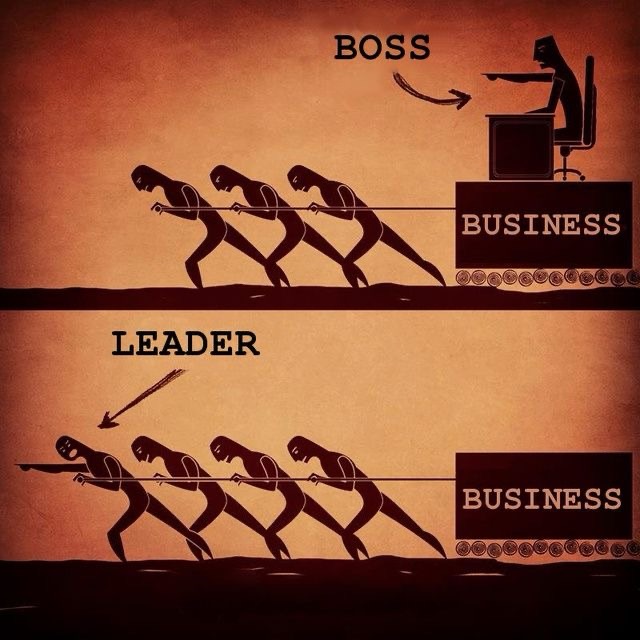
I used to think leadership was about being the person with all the answers.
You walk into the room with a plan, tell everyone what to do, and move full speed ahead.
But over time, I’ve realized that real leadership looks a lot different.
It starts with listening—really listening. Not just letting people talk so you can move on, but giving them space to speak up about the real problems they’re seeing and the ideas they have to make things better.
That’s 90% of the job.
The other 10% is where great leaders separate themselves.
They take in everyone’s input, let the team build on each other’s ideas, and they make a call. They pick a direction, and they move—one step at a time.
Not because they had all the answers to begin with, but because they took the time to understand the experiences of the people closest to them.
Great leadership starts with listening to your team. It ends with listening to your intuition.
I didn’t understand the difference until I lived it.
Here’s how I’d explain it to a teenager who’s thinking about getting into business:
Billy and Sarah both get $1,000 for Christmas.
Billy uses $750 to buy a new camera. He spends the other $250 on a videography course. A few weeks later, someone hires him to shoot a wedding. Then a real estate gig. Then a music video.
Billy’s good at what he does. People like working with him. So, he keeps doing it.
Billy is a freelancer.
Now Sarah, she does something different.
She holds onto her $1,000 until she has a spark. A vision. She wants to build a fitness brand.
She spends $500 to bring on a consultant—someone who’s already built a successful fitness business. Then she uses the other $500 to test her idea. She runs ads to see who’s interested, gathers feedback, and takes one step at a time.
She opens up a line of credit at the bank. She hires trainers, rents a gym, and then steps back and lets them do what they have specific knowledge in. She’s still involved—but now she spends most of her time on creating a positive environment for her staff and clients to thrive.
Sarah is an entrepreneur.
Billy works in the business. Sarah works on the business.
Freelancers make money when they work. Entrepreneurs make money when they sleep.
One path builds a life around your skill. The other builds something that lives beyond your skill.
Neither path is wrong.
For better or worse, we are not our ideas. It is easy to fall into the trap of thinking we are either the world’s biggest idiot (when something fails) or too brilliant for our own good (when we succeed).
The truth is, our ideas don’t belong to us. They are simply out there in the world, floating around waiting for someone to stumble upon them.
The goal is to bring these ideas into our world and kick them around until they are solidified.
If someone comes along and makes the idea better, bringing it one step closer to its final form, it’s not uncommon to get upset.
More often than not, we either feel personally attacked because we identify too closely with the idea, or we wish we had been the one that thought of how to improve it.
In reality, you didn’t think of the first idea either. No matter how brilliant or dumb it may be, it was never yours.
Who comes to mind when you think of being fearless?
What characteristics do they have?
In everything that we do, it would be better if we were a little more fearless.
For the first 6 months of this job, I moved fast—but rarely in the right direction.
I’d jump to redesign the website, promote a polished post, or throw money at something that made our company look like we had it all figured out. But most of it was noise. Looking back, those moves weren’t rooted in strategy. They were rooted in insecurity. We weren’t building— we were decorating.
It wasn’t until our first production where I started working closely with people in the film industry that things started to shift. These were smart, seasoned producers. They didn’t move until they were sure it was the right direction. They talked constantly about protecting the money and only greenlighting something once all the pieces made sense.
At first, I thought they were being overly cautious. But over time, I saw the wisdom: they weren’t afraid to slow down if it meant getting it right.
That changed everything for me.
Now, instead of rushing to look legitimate, I try to focus on doing the work that makes us legitimate: getting new business, delivering value, learning from seasoned business owners, and putting people much smarter and more creative than me in a position to succeed.
Warren Buffett said, “I do more reading and thinking, and make less impulse decisions than most people in business.”
Yes, there are plenty of small decisions in business that require speed. But the art is knowing when to pause and ask the harder question:
Is this move about making me feel better… or making the business better?
If you’re building something meaningful, make space to think. Make space to get it right.
There’s a fine line between staying up to date and waterboarding your brain with unnecessary information.
Too often I find myself consuming.
There’s a difference between wanting more from yourself and wanting more for yourself.
The first implies ownerships.
The second implies entitlement.
If the plan is to continuously “create and do,” why would we “create and do” something that we don’t love?
We must stop negotiating with ourselves.
Work is not something we can wait to feel motivated for.
It’s something we show up for—because it anchors us.
It energizes the rest of our day.
It’s not a burden, but a blessing.
A way to build momentum.
We are not a victim of our work—we are a servant to our calling.
It’s daunting to try and build a million-dollar business.
It’s hard to become the best of all time at anything.
There’s nothing wrong with aiming high, chasing greatness, or wanting to be better than your idols.
We’ve all done it.
But friendly reminder: success is subjective.
Who’s to say Jordan is better than LeBron?
Some analyst who’s never touched a basketball? Five of your buddies that have had too many drinks in your basement?
The truth is, there’s no scoreboard for this game. The goal isn’t to win. The goal is to get better.
That’s it.
Are you willing to surrender to that idea?
Are you willing to change how you approach life?
Because the point isn’t perfection.
The point is becoming who you’re meant to be.
You know those days when you wake up early, move your body, eat clean, have good conversations, stay off your phone, and go to bed with a clear head?
That’s it.
That’s the win.
You didn’t crack the code to life.
You didn’t make millions.
You didn’t break a world record.
But you got a little bit better.
And that’s the whole point.
The War of Art by Steven Pressfield is a must read.
Whether you are contemplating starting a new diet, workout routine, changing careers, launching a side hustle, it doesn’t matter. It will speak to you.
I must warn you though, this book will make you feel ashamed before it motivates you.
At first, you are forced to acknowledge all the excuses you’ve fed yourself over the years. By the end, you’ll feel as though you can change the world.
Only read this book if you want to make improvements in your life. Otherwise it’s just a waste of your time.

